

Risk management rarely sits at the top of a company’s priority list. Not until something breaks. A control failure. A cybersecurity incident. A compliance issue that snowballs into something larger. Then suddenly, risk becomes the conversation.
Risk management rarely sits at the top of a company’s priority list. Not until something breaks. A control failure. A cybersecurity incident. A compliance issue that snowballs into something larger. Then suddenly, risk becomes the conversation.
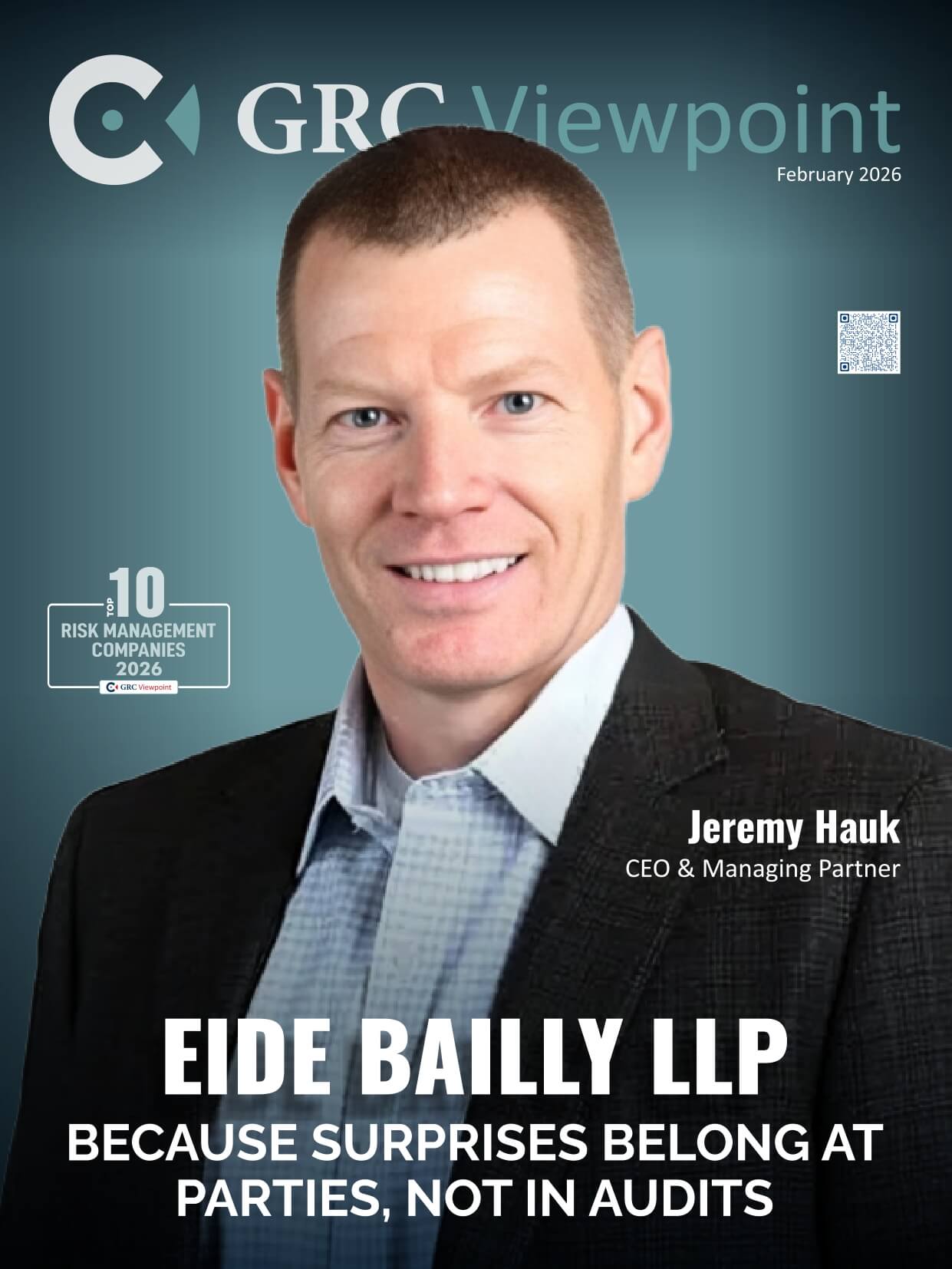
This is where firms like Eide Bailly LLP enter the picture. Not as alarmists. Not as auditors pointing fingers. But as advisors who understand that risk management is less about reacting and more about building systems that hold steady under pressure.
Eide Bailly LLP, headquartered in North Dakota, has long been recognized as a leading CPA and business advisory firm. Yet framing the organization purely through accounting or tax services misses the broader story. The firm has steadily evolved into a multidisciplinary advisory partner, with risk management woven directly into how it supports clients.
And that shift did not happen overnight. The firm’s origins trace back more than a century, rooted in regional accounting practices that eventually merged to form Eide Bailly LLP. Growth followed, driven by expansion, acquisitions, and a deliberate move toward consulting and advisory services. Today, the firm operates across dozens of offices in the United States, supported by thousands of professionals who work across accounting, technology, cybersecurity, business consulting, and risk advisory.
Scale matters, but only to a point. What often stands out more is how the firm positions risk management within the broader business conversation. Risk, after all, does not live in isolation.
Financial reporting risks connect directly to internal controls. Operational risks tie back to process design. Technology risks intersect with governance, compliance, and leadership decisions. Organizations rarely experience “risk issues” as standalone events. Problems tend to surface at the intersections.
Eide Bailly’s advisory model reflects this reality. Rather than treating risk management as a siloed function, the firm integrates risk considerations into financial, operational, and technological engagements. The result feels less like a checklist exercise and more like structural work.
Consider internal controls. Many companies still approach controls as something implemented primarily to satisfy audit requirements. Controls become documentation-heavy, reactive, and sometimes disconnected from day-to-day operations. Employees follow procedures without fully understanding the “why” behind them.
Experienced advisors tend to see a different picture. Controls are not just safeguards. They are operational architecture. When designed well, they reduce errors, improve efficiency, and create clarity across teams. When designed poorly, they generate friction, duplication, and blind spots.
Eide Bailly’s work in this area typically moves beyond testing controls to examining how processes function in practice. Where breakdowns occur. Where responsibilities blur. Where informal workarounds quietly undermine formal policies.
It is rarely about dramatic failures. More often, it is about subtle misalignments. The same pattern appears in enterprise risk management engagements. Organizations often begin these conversations with broad concerns. Regulatory pressure. Market uncertainty. Technology changes. Leadership transitions. The risks feel everywhere, yet nowhere specific.
Structured risk assessments help bring shape to that ambiguity. Advisors work with leadership teams to identify potential threats, evaluate their impact, and prioritize responses. Not every risk requires elimination. Some require mitigation. Others demand monitoring. A few may even represent opportunity, though that idea sometimes takes longer to land.
Risk management, at its core, involves decision-making under uncertainty. Eide Bailly’s role frequently centers on helping organizations formalize this thinking. Establishing frameworks. Aligning risk appetite with strategy. Translating abstract concerns into measurable factors. The conversations can feel technical, yet the underlying questions remain practical.
What could realistically disrupt operations? How prepared is the organization? Where are the blind spots?
Technology risks have become a particularly dominant theme. Cybersecurity now sits alongside financial and operational risk as a board-level concern. Yet many companies continue to treat cybersecurity as primarily an IT responsibility.
That approach carries limitations. Technology risk is business risk. A system outage affects revenue. A data breach impacts reputation. Compliance failures trigger regulatory consequences. These outcomes extend far beyond technical departments.
Eide Bailly’s technology and cybersecurity advisory teams tend to approach this space from a governance perspective. Security controls. Risk assessments. Compliance alignment. Incident response planning. Conversations that bridge technical safeguards with business continuity.
It is not unusual to see clients arrive with a narrow objective. Perhaps a compliance requirement tied to a specific regulation. Over time, the engagement expands. Broader assessments. Process redesign. Leadership-level discussions around resilience and preparedness.
One question often leads to another. Fraud and forensic advisory services introduce another dimension of risk management. Financial misconduct rarely begins with large-scale schemes. It typically starts small. Control gaps. Oversight weaknesses. Behavioral signals that go unnoticed or unaddressed.
Forensic advisors operate at the uncomfortable edge of organizational reality.
Investigations. Dispute support. Fraud risk assessments. Sensitive engagements that demand both technical expertise and professional discretion. In many cases, the work involves strengthening preventive mechanisms rather than reacting to confirmed incidents.
Prevention rarely attracts headlines. Yet it defines effective risk management. What distinguishes Eide Bailly’s approach across these domains is less about individual service lines and more about how those services connect. Risk advisory intersects with accounting. Technology consulting aligns with internal controls. Compliance reviews inform operational design.
Clients often describe the firm as functioning like an extension of their internal teams. A phrase that appears frequently in professional services marketing. Yet in risk management contexts, the sentiment carries particular weight.
Effective risk advisory depends on proximity. Advisors must understand not only policies and procedures but also organizational culture, leadership dynamics, and operational realities. Risks rarely reveal themselves fully through documentation alone. They surface through conversations, observations, and patterns.
And sometimes through what is not said. Working relationships become central. Trust. Continuity. Institutional knowledge developed over years rather than quarters. Especially in engagements tied to internal audit, enterprise risk assessments, or ongoing compliance monitoring.
Risk management is not a one-time intervention. It is an evolving discipline shaped by regulatory shifts, technological change, market conditions, and organizational growth. Frameworks that worked five years ago may require recalibration. Controls designed for smaller operations may strain under expansion.
Growth introduces complexity. Complexity introduces risk. Eide Bailly’s client base spans industries with distinct risk profiles. Financial institutions operate under dense regulatory scrutiny. Healthcare organizations face compliance and data privacy pressures. Manufacturing firms contend with operational and supply chain vulnerabilities.
Industry expertise becomes more than a credential. It informs risk interpretation. Advisors who understand sector-specific dynamics recognize patterns faster. Emerging risks. Regulatory trends. Common control weaknesses. The conversations shift from theoretical to grounded.
“You are likely to encounter X under these conditions.”
“Organizations similar to yours often struggle with Y.”
That contextual fluency shapes advisory effectiveness.
Equally important is the firm’s internal composition. Risk management today demands multidisciplinary thinking. Accounting knowledge alone cannot address cybersecurity exposures. Technical expertise alone cannot resolve governance gaps. Compliance insight alone cannot redesign operational processes.
Eide Bailly’s structure reflects this interconnected landscape. Professionals across accounting, consulting, cybersecurity, data analytics, and business advisory collaborate within client engagements. The boundaries between disciplines blur. Which, in practice, mirrors how risks themselves behave.
Risk management increasingly functions as an organizational lens rather than a discrete department. Viewed through this lens, Eide Bailly’s evolution appears less like diversification and more like alignment with how businesses actually operate. Financial systems connect to technology platforms. Governance frameworks influence operational execution. Strategy intersects with risk appetite. Everything connects.
Looking ahead, the risk environment shows little sign of stabilizing. Regulatory requirements continue to expand. Cyber threats grow more sophisticated. Market conditions shift rapidly. Stakeholders demand greater transparency and accountability.
Organizations respond by investing in resilience. Stronger controls. Better data visibility. Formalized risk frameworks. Technology safeguards integrated with governance. Advisory partners capable of bridging disciplines rather than reinforcing silos.
This is where Eide Bailly LLP positions itself. Not simply as a compliance partner, though compliance remains foundational. Not merely as an accounting firm, though accounting expertise underpins credibility. But as a strategic advisor operating at the intersection of performance, protection, and long-term stability.
Risk management, when approached thoughtfully, does not constrain growth. It enables it.
That idea, perhaps more than any specific service offering, captures the firm’s broader value proposition. Helping organizations build systems that hold. Structures that flex without breaking. Frameworks that support decision-making under uncertainty. Because risk never disappears. But it can be understood. Anticipated. Managed. And occasionally, turned into advantage.